




















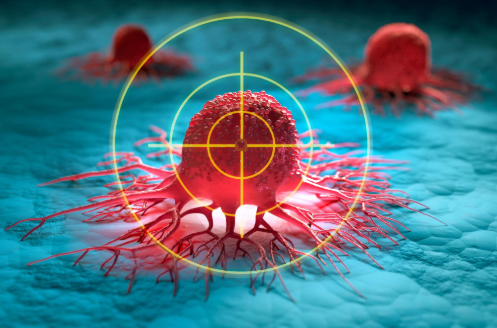
Tumor-Hunting Bacteria Researchers have reached a major milestone in oncology with the development of engineered bacteria that act as “tiny tumor hunters.” These bacteria are designed to navigate the body, locate tumors, and transform into “drug factories” to kill cancer cells from the inside.
Currently, the most common cancer treatment, chemotherapy, comes with many downsides. According to the Cleveland Clinic, “Chemo can’t tell the difference between fast-growing cancer cells and fast-growing healthy cells. When the chemo damages healthy cells, you can experience side effects.” These side effects include hair loss, fatigue, loss of appetite, skin changes, weakened immune system, nausea, and other symptoms, which can cause an already troubled cancer patient to feel worse. However, as an alternative, scientists have proposed inserting certain bacteria into the human body to treat cancer, which don’t include many of these side effects.
Scientists have been studying bacteria to treat cancer for over 150 years. This idea originated when William B. Coley, an American bone surgeon and cancer researcher in the late 19th century, noticed that some cancer patients who developed bacterial infections after surgery showed no signs of disease on tests. Scientists at the time couldn’t fully understand why, but they figured out that certain bacteria could stimulate the immune system.
Going forward in time, researchers discovered that certain bacteria, specifically those that thrive without oxygen, can grow specifically inside tumors, an abnormal, solid mass of tissue resulting from uncontrolled cellular growth, and this can sometimes happen due to cancer cells. Tumors often have poor blood flow and dead tissue, which, although harmful to humans, create a perfect environment for these bacteria, which means that bacteria might be able to reach and treat tumors more effectively than traditional chemotherapy drugs. With modern advances in molecular biology and DNA sequencing, interest in using bacteria as cancer treatments has once again grown.
One example being studied is Salmonella, a food-borne pathogen that shows promise as a potential cancer-fighting agent. Salmonella is a bacterium we commonly mention when discussing food poisoning caused by eating raw or undercooked eggs, poultry, meat, or unpasteurized milk. Therefore, it is strange that such a bacterium is being used to help cancer patients, and many have concerns about the matter. However, Salmonella is an anaerobic bacterium and an immunogenic bacterium (Definition at the bottom). Dr. Gang Zhou, a Professor at Georgia Cancer Center, Medicine, MCG, and his team of scientists recently conducted a study on a modified Salmonella strain that could selectively colonize tumors, promote cell growth, and improve treatments.
Another example of one of these bacteria is Escherichia coli (E. coli), a bacterium also associated with food poisoning. New research published on March 17, 2026, in the open-access journal PLOS Biology by Tianyu Jiang at Shandong University in Qingdao, China, points to a bold new approach. The team found that Escherichia coli Nissle 1917 (EcN) can be engineered to carry anticancer compounds and target tumors in mice and, potentially, humans. Other researchers have genetically engineered E. Coli to carry markers found in cancer cells, teaching the immune system to destroy the tumor while sparing normal cells.
The rise of tumor-targeting bacteria marks a new era of “living medicine.” Though unorthodox, microbes like Salmonella and E. coli can naturally seek out tumors, offering a promising alternative to the limitations of current chemo treatments. With further refinement, they could enable more precise and adaptable cancer treatments, saving even more human lives.
Anaerobic bacterium: Microorganisms that can grow without oxygen
Oncology: Specific branch of medicine relating to the diagnosis, treatment, and study of cancer.
Immunogenic bacterium: Bacteria that trigger an active, defensive, immune response in the human body, leading to more antibodies being produced to fight them off.