






















Australia is a place full of adventure as well as danger. The country/continent is home to beautiful and unique landmarks as well as amazing people and animals. However, a new problem has begun bothering surfers, tourists, locals, and others near the coast: shark attacks.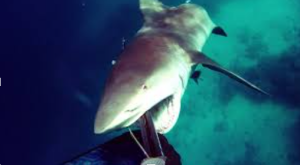
An 11-year-old boy whose name has not been made public was recently attacked by a shark. According to the Manly Observer, “I was on the board when the shark came up and bit it. I got knocked off the board. One of the guys out there went over to me and helped me get back onto shore quickly.”
Additionally, the boy noted that, “I’m physically fine, but I’m obviously rattled, and the board has a chunk taken out of it and a couple of bite marks in it.” The attack involved a bull shark and was one of three attacks that occurred during the day. Scientists suspect that bull sharks, stout-looking marine animals considered among the few shark species dangerous to humans, are gathering near Australia for some unknown reason.
According to the National Wildlife Federation, “They prefer shallow coastal water, which means they can often come into contact with humans. Bull sharks are often considered to be the most dangerous sharks to humans because of their aggressive tendencies and ability to migrate up rivers.” Reports of the attacks seem to paint a clear picture of how these shark attacks could have occurred, but the evidence isn’t as solid as it appears. Despite Australia being one of the most shark-populated areas in the world, the number of recent shark attacks is extremely rare, and experts have identified an explanation.
In 2024, Australia only received 9 shark attacks with no fatalities. Between late 2025 and early 2026, Australia recorded 23 shark attacks. According to BBC News, “The attacks followed several days of heavy rain, which experts say created a ‘perfect storm’ of conditions for bull sharks who prefer murky water. They also say rain flushes nutrients into the water, which can draw sharks closer to shore.”
The day after the attack on the boy, a 27-year-old surfer was left with a catastrophic injury when a shark bit off his leg just off the coast of Manly Beach. This string of unusual and unlikely attacks has prompted Australian authorities to close beaches across the coast near New South Wales.
To prevent further shark attacks, authorities are employing various methods, including shark nets, drumlines, drones, and DNA testing, to keep sharks away from beaches and to track them using tags.
Shark nets are a controversial method of deterring sharks, as they often trap and kill wildlife that becomes entangled, and they are easy to go over and around. Drumlines are deployed to alert authorities when a shark is caught, enabling them to tag and release it. Drones and DNA traces, while still unorthodox, may prove to be the way forward, as they offer more humane and environmentally sound methods for preventing attacks.
Despite the terror inspired by these recent events, the strength of the Australian surfing community remains unshaken. Authorities and researchers hope to understand why these aggressive bull sharks have gathered so close to shore, and that these new precautions will soon make the waters safe enough for the country’s surfers to return to the waves.