



















After immense planning, dedication, and problem-solving, NASA has declared that the Artemis II mission will launch on April Fools’ Day (April 1st), and they’re not kidding! Artemis II will be a manned mission, unlike the previous Artemis mission, meaning there will be astronauts on the ship. While the main mission is to test our current capabilities for human space exploration, studies on the effects of space travel will be conducted as well.
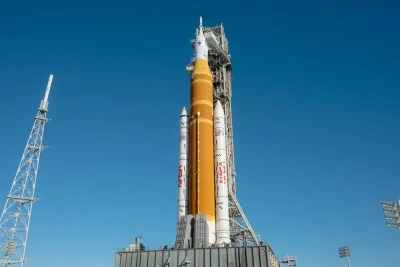
The ship the Artemis II astronauts will take on a flyby around the moon is composed of an Orion spacecraft and a new kind of “heavy lift rocket” called the SLS. The Orion spacecraft will be the sole living space sustaining and protecting the 4-person crew of the Artemis II mission, which will last 10 days. The spacecraft will launch from the Kennedy Space Center in Florida, loop around Earth twice, then slingshot around the moon and land off the coast of San Diego, California.
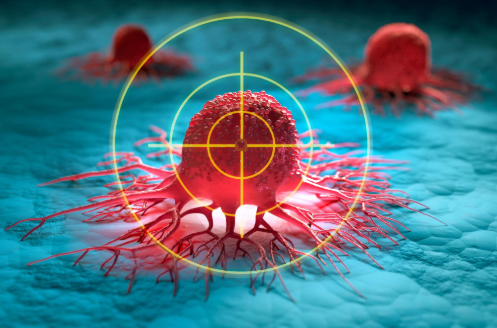
Using a new kind of technology called AVATAR, NASA will be able to better model and evaluate the impact of space travel on humans. These “organs on a chip” are made from organic tissues and cells to simulate how the different organs of an astronaut’s body will react to various space stressors. For example, one part of the chip will simulate a human liver, and seeing how the liver would react could help improve treatments to various illnesses. The experiment offers benefits for testing cancer treatments and accelerating drug development, enabling personalized medicine for cancer patients. This could have a significant impact on healthcare, both for astronauts in space and for citizens on Earth, helping everyone.
In a separate study, ARCHeR, which will happen during the mission, they will monitor the behaviors and health of astronauts through measuring their sleep patterns, activity, social interactions, and well-being. They especially want to see how the impact of “space hazards,” such as radiation exposure, cosmic rays, and isolation, will impact their productivity during the mission. This knowledge will help NASA scientists gather data and observe patterns to make future missions safer.
The astronauts have been carefully preparing for what to do when they fly around the moon. According to NASA, the astronauts went to an ancient volcanic field in northern Arizona desert to participate in a field geology course aimed at arming them with first-hand experience in what Artemis astronauts will do when they explore the Moon. The astronauts will be taking pictures of the moon’s surface with higher-tech cameras that cannot be operated by robots, such as Nikon D5 DSLRs. Although the camera model is old, NASA is said to have chosen these for their ruggedness.
This mission will be the first to do many things. For example, Christina Koch will be the first woman astronaut to go to the moon, while Jeremy Hansen will be the first Canadian astronaut to do so. Additionally, the mission is also the first crewed mission of NASA’s Artemis program, scheduled to send four astronauts around the Moon and back in 2026. It is the first crewed flight of the Space Launch System (SLS) rocket and Orion spacecraft, marking the first human lunar flyby in over 50 years.
Astronaut Gregory Reid Wiseman, former Naval Aviator, says that, “We’ve always looked at the moon and said, ‘We’ve been there.’ But for this whole generation, for our generation, for the younger generation, for the Artemis generation, they’re going to look at the moon now and go, ‘We are there,’” The Artemis missions are a huge leap forward for humankind in the field of space exploration.